Loki Robotics: Automating Facility Maintenance
A Swiss-American startup is deploying compliant robotic arms in restrooms and commercial kitchens, the spaces every other automation platform has consistently declined to touch
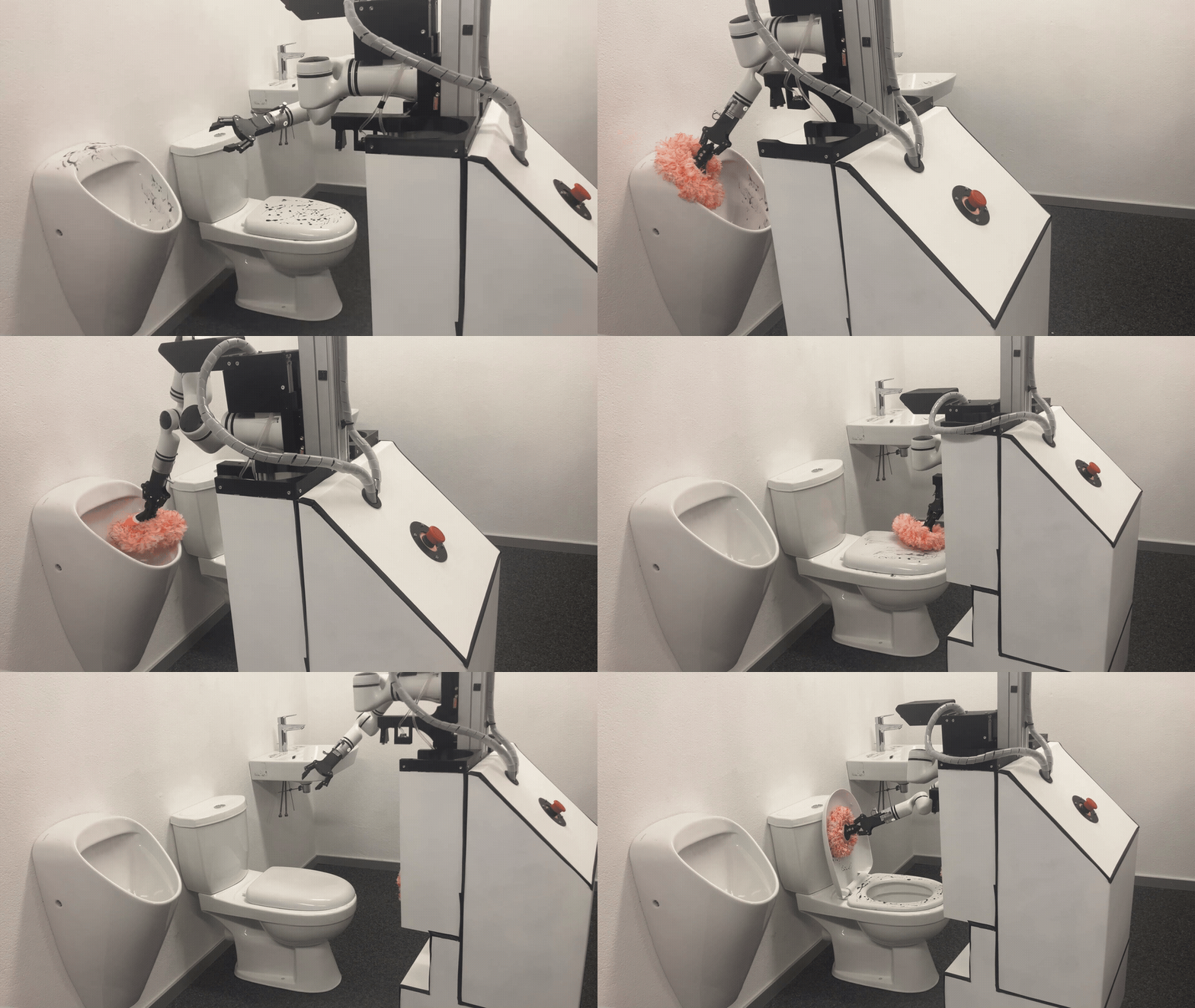
Floor-scrubbing robots have been navigating flat surfaces in warehouses and airports for years. That solved problem is not what Loki Robotics is working on. The harder version, cleaning a toilet, wiping down a sink, swapping cleaning agents based on what surface the robot is looking at, remains almost entirely manual despite a global janitorial services market that Grand View Research sizes at $288 billion and growing. The reason it has stayed manual is not that the economic opportunity is unclear. It is that the environments are genuinely hard: unstructured, variable, full of fixtures that differ between every facility, and sensitive enough that deploying a camera-equipped robot raises immediate and legitimate privacy questions. Loki is building the platform that handles all of it.
The company was founded in 2024 by Miks Ozols (CEO) and Antonio Arbues (CTO), who met on the Formula Student racing team at ETH Zurich and went on to win competitions across Europe. Ozols built autonomous drones at Wingtra afterward; Arbues worked on self-driving systems at Motional and built an LLM side project that reached 15,000 users in under three months. The company is headquartered in San Francisco, with Swiss roots and a funding base that includes investors from the Nordic and Baltic VC community.
What the Robot Actually Does
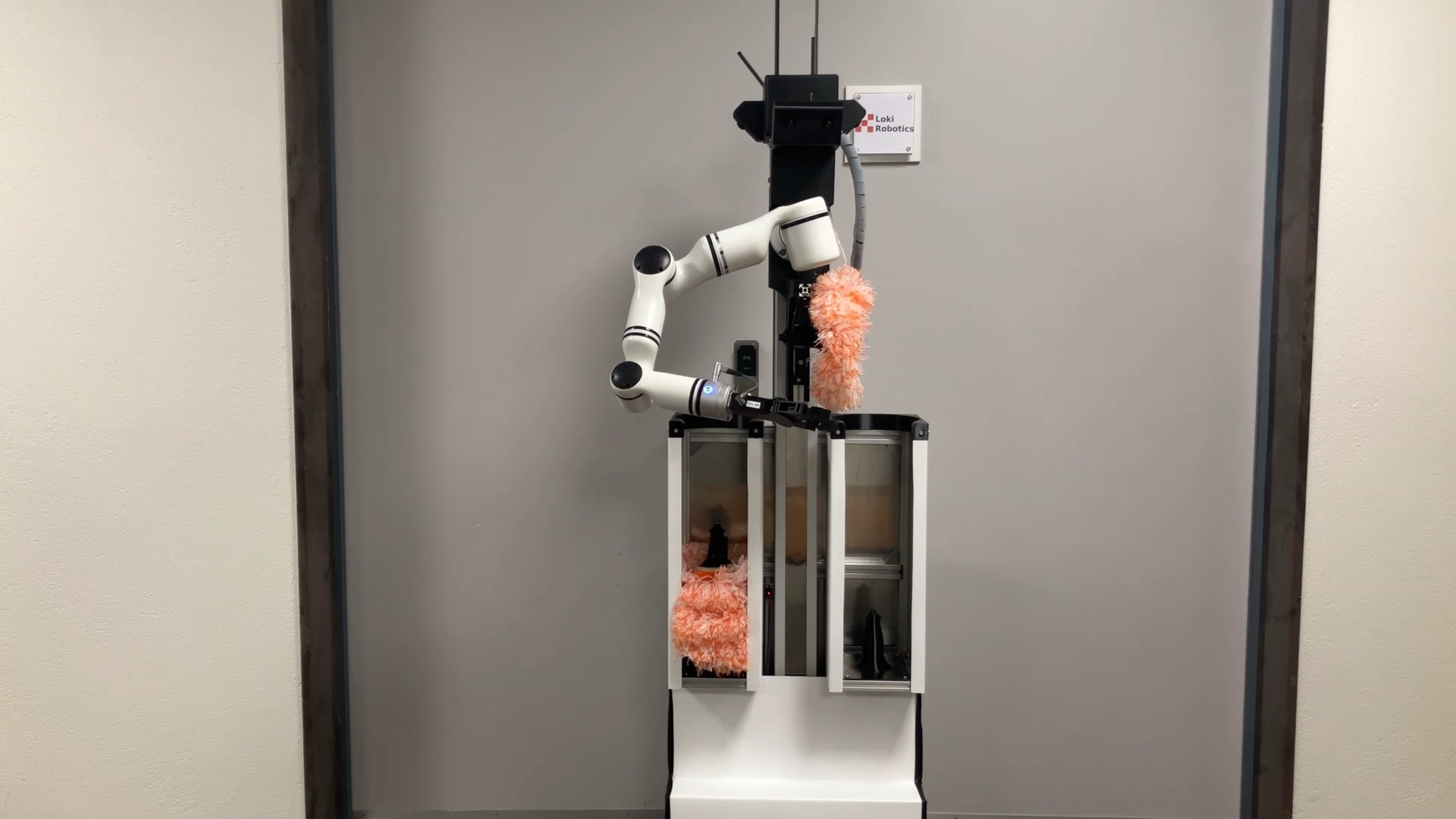
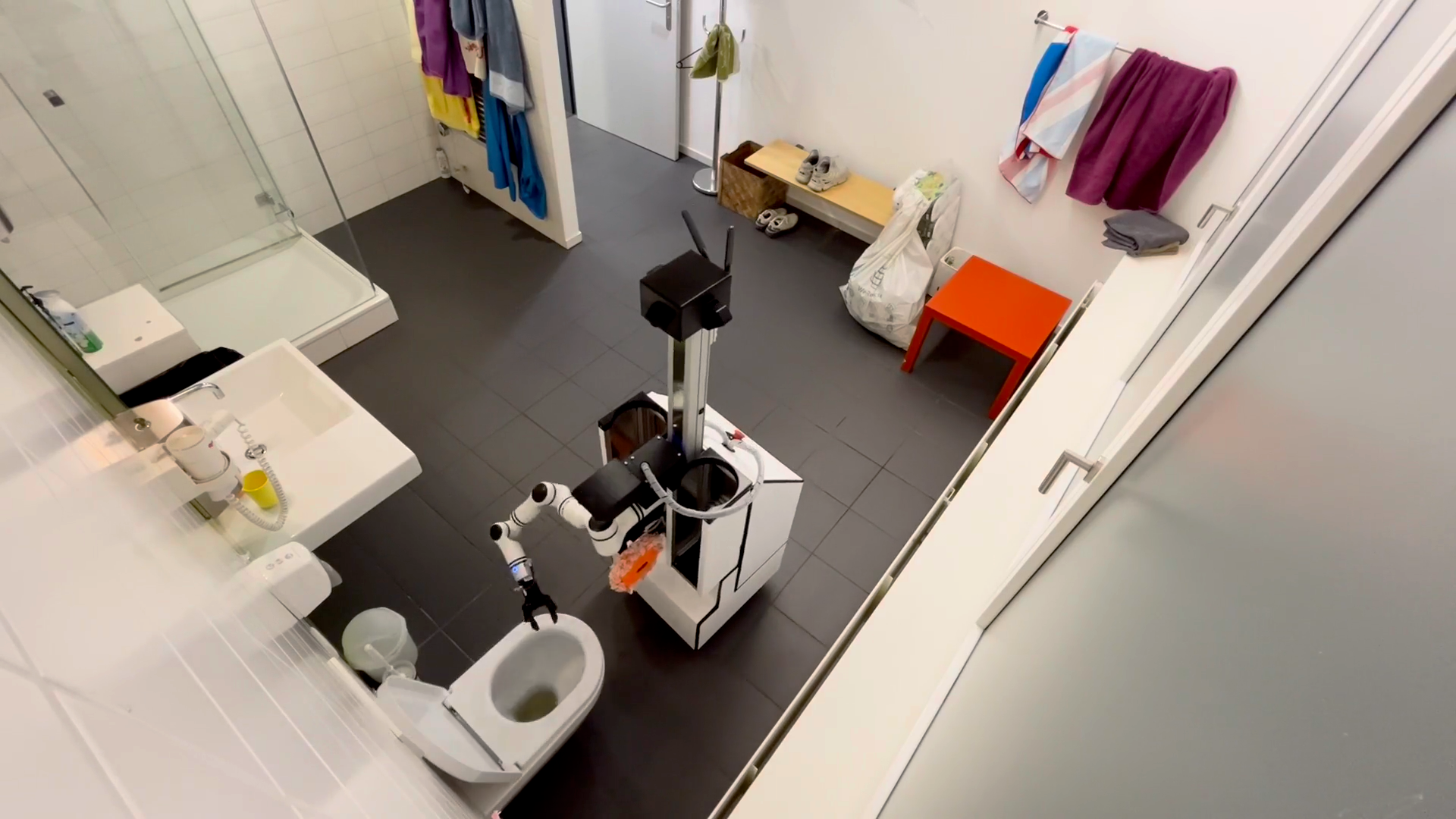
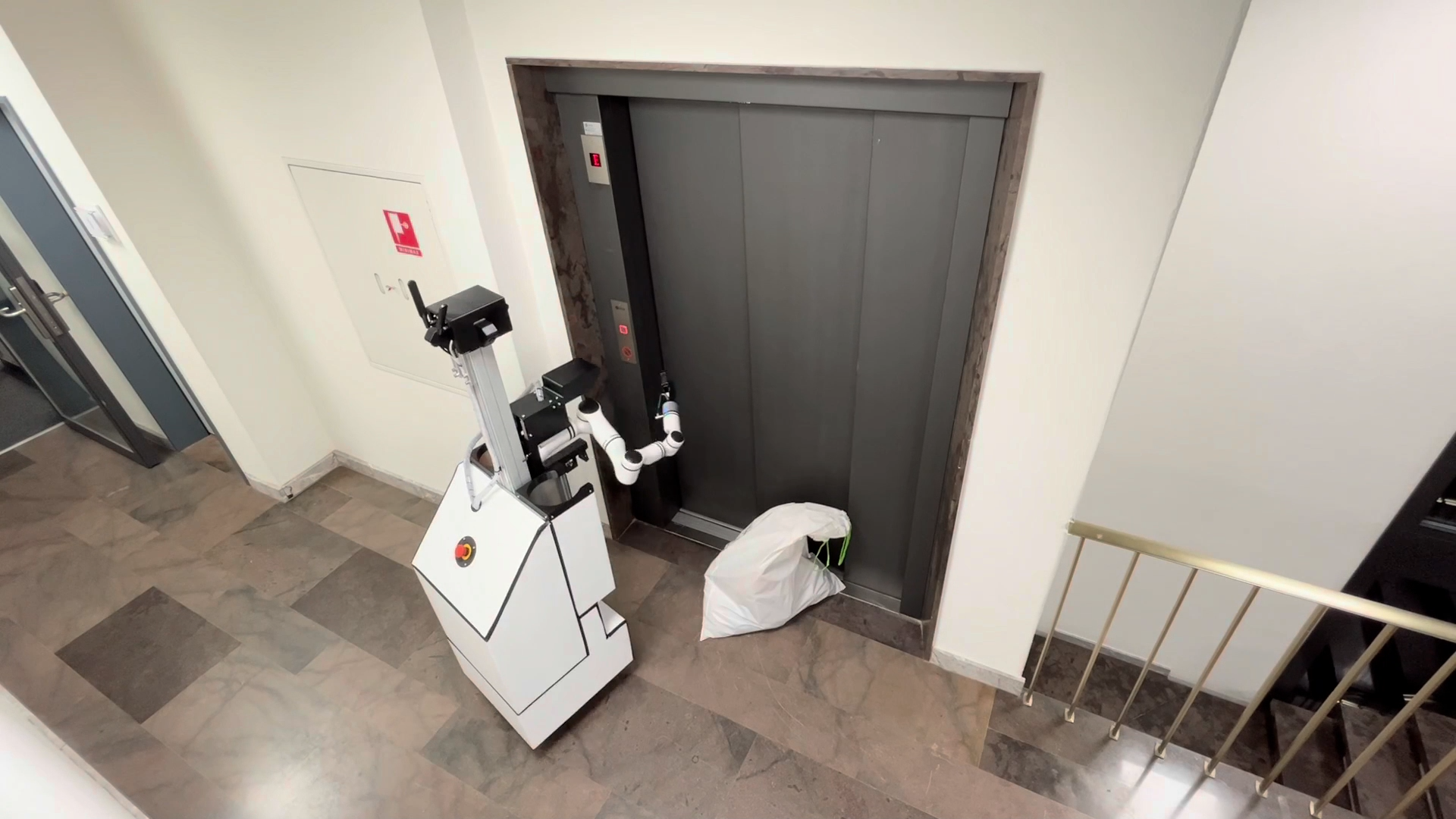
Loki is a single robotic arm mounted on a mobile base with two storage bins for cleaning supplies. It does not attempt to look like a humanoid; it borrows the useful parts of that form factor, compliant manipulation and multi-surface tool handling, while staying practical enough to fit in a commercial restroom stall. The physical intelligence is in the arm itself, which uses impedance-based inverse kinematics to sense how much force it is applying and adjust in real time, the same way a person moderates pressure when scrubbing a surface rather than applying fixed force regardless of what they encounter.
8-hour shifts. Day-in, day-out. A robot fleet deployed across continents.
— Loki Robotics (@loki_robotics) January 8, 2026
For the last 6 months, our robots have been at work and embedded into daily facility management workflows in data centers, office buildings, and campuses around the world.
Here is what we have learned: pic.twitter.com/HAllqvOxNU
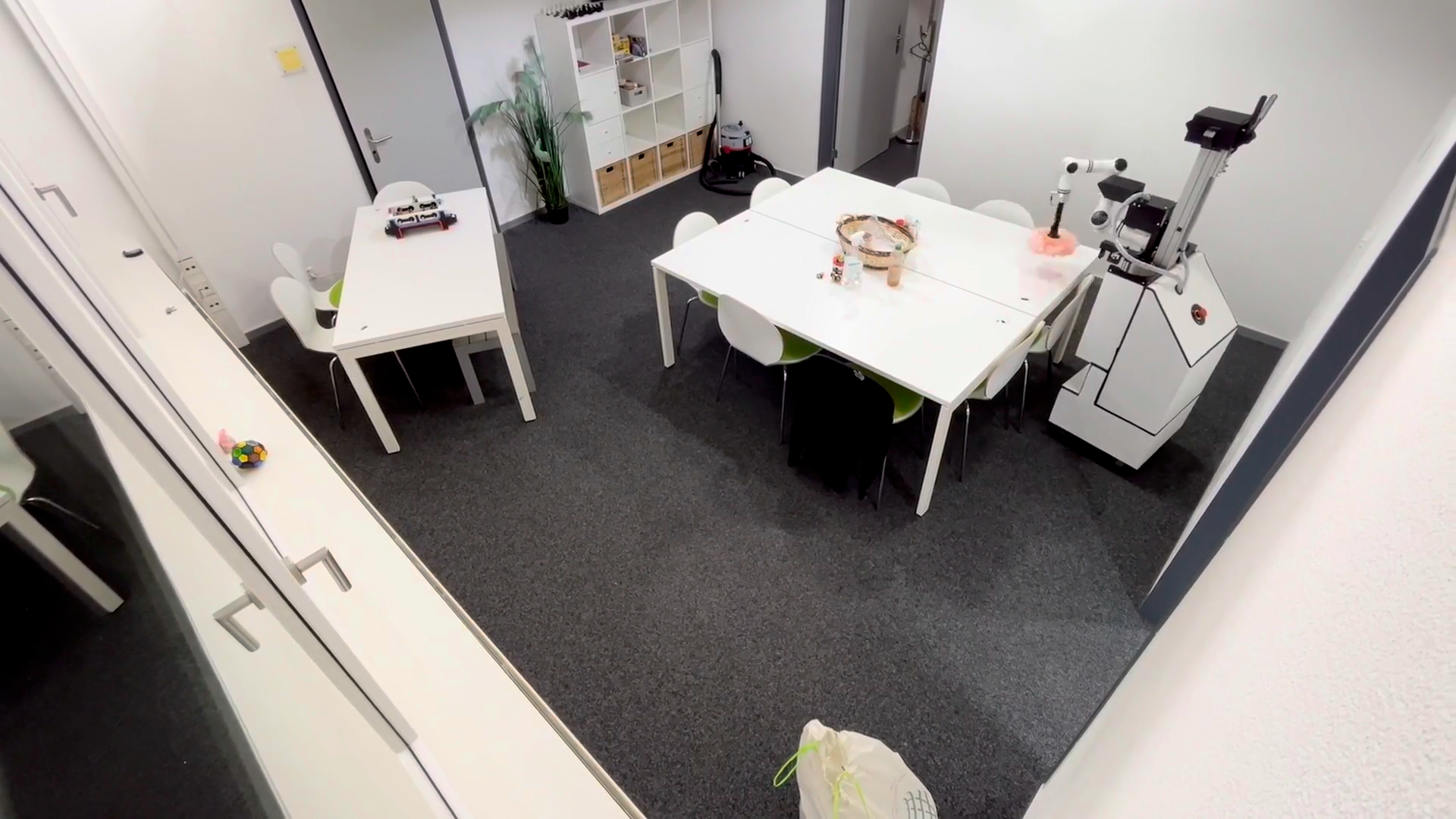
The learning pipeline is what makes deployment fast. When Loki enters a new facility, human operators guide the robot through specific cleaning tasks via teleoperation. Those demonstrations become training data. The AI generalizes from them, handling variations in fixture layout and surface type that differ from what it was shown without requiring a new demonstration for each variant. As of mid-2025, Loki's robots have been running 8-hour shifts embedded into daily facility management workflows across data centers, office buildings, and campuses on multiple continents.
The Privacy Architecture
Deploying a camera-equipped robot in a commercial restroom is the fastest way to end a sales conversation with a facility manager. Loki addresses this not with a policy but with an architecture. All visual processing happens on the device itself. The robot's vision system identifies fixtures and detects soiling, converts that information into spatial coordinates for the cleaning arm, and then discards the source image. No raw video enters a cloud database. Nothing leaves the device.
Platform Capabilities
Funding and Market Position
Loki closed a $1.6 million pre-seed round in May 2025 led by byFounders, with participation from Boost VC, Acequia Capital, Earthling VC, Founderful Campus, and Unruly Capital. The capital is being deployed toward commercial rollout and team expansion. byFounders' investment thesis was direct: the market is over $350 billion globally, the tasks are repetitive, and the environments are complex enough that very few robots can handle them today, which is precisely what makes it a defensible wedge.
The commercial model is expected to follow the Robot-as-a-Service pattern, converting hardware into a monthly operating cost that includes software updates and maintenance. The natural initial customer base is high-traffic venues where cleaning frequency and labor cost are both elevated: airports, stadiums, corporate campuses, and the data centers where Loki is already running. Closest funded competitors include Somatic, Primech AI, and Peanut Robotics.
The Signal
Loki’s technical stack is a deliberate blueprint for solving unstructured physical environments. By prioritizing on-device privacy, using teleoperation to bypass the simulation-to-reality gap, and employing impedance control, they are specifically targeting the high-friction spaces that have stalled previous automation attempts.
The restroom serves as the ultimate stress test for this hardware. Loki is effectively building the autonomy layer for entire facilities, using cleaning as the initial entry point. Once a system learns to navigate the physical complexity of a public bathroom, the remaining tasks within a building become much more tractable. The real asset here is the massive, cross-continental dataset they are amassing in the process.
Thanks for reading, consider our article on The Modern Warehouse to learn more on today's automation at scale.
Read More on Loki
Grand View Research - Global Janitorial Service Market Size
Why We Invested in Loki Robotics - byFounders
$1.6 million for a restroom cleaning robot - StartupTicker
6-month deployment update - Loki Robotics on X
Loki Robotics - Official website