From Research Lab to Rockwell's Factory Floor
How a Canadian robotics startup built the AMR platform that Rockwell Automation paid up to $600 million to own, and what it means that OTTO robots are now being built on US soil for the first time
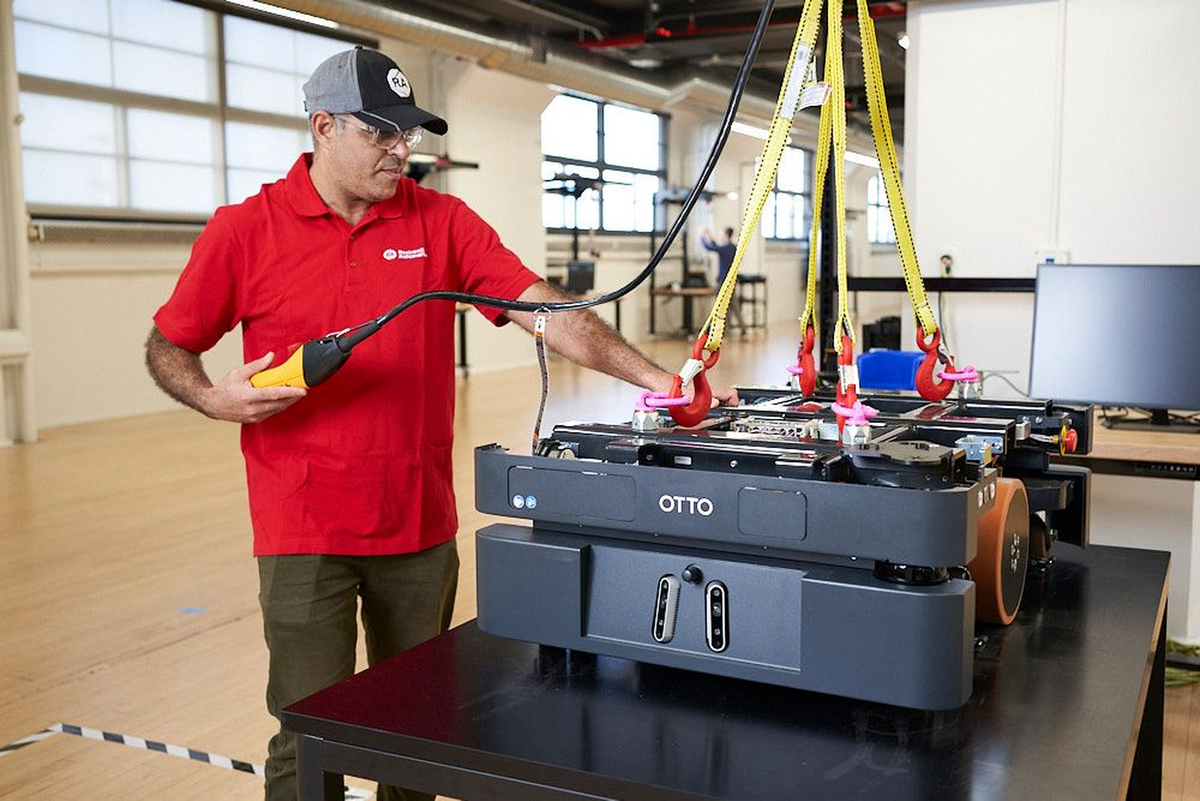
The Clearpath and OTTO Story
Clearpath Robotics started where a lot of interesting hardware companies start: with a problem that was dangerous enough that the people who had to solve it were genuinely motivated to hand it off to a machine. The founders were thinking about hazardous environments, the kind of terrain or situation where sending a human makes everyone uncomfortable. From that starting point, the company built autonomous ground vehicles for research and industrial use, grew a separate commercial division called OTTO Motors focused on warehouse and manufacturing logistics, and eventually caught the attention of one of the world's largest industrial automation companies.
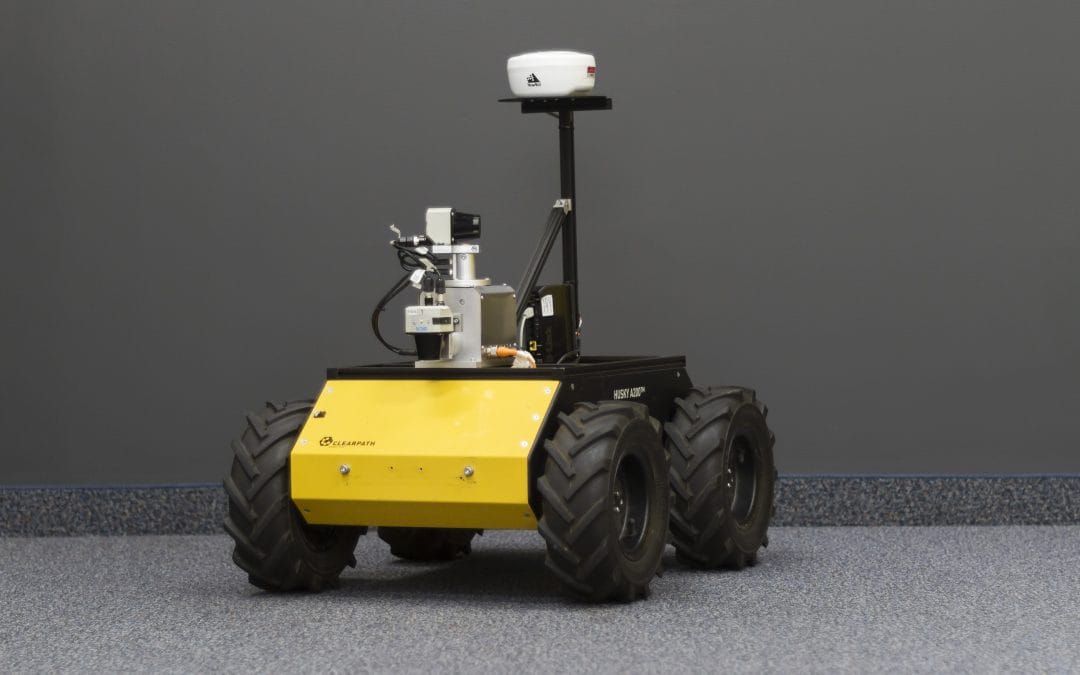
Original Clearpath AMRs
In October 2023, Rockwell Automation (NYSE: ROK) completed its acquisition of Clearpath for up to $600 million, funded by the proceeds from selling its stake in PTC. Two years later, the first OTTO AMRs rolled off a brand new 25,000 square foot production line at Rockwell's Milwaukee headquarters, making Rockwell the largest industrial automation company building AMRs in the United States. That is a meaningful distance to travel from a university spinout in Kitchener, Ontario.
Where Clearpath Started
Clearpath was founded in 2009 by a group that included Matt Rendall, who would go on to serve as CEO through the acquisition. The company's original thesis was autonomous vehicles for environments that were too dull, dirty, or dangerous for human operators: mining sites, military applications, agricultural fields, and research environments where the need for a mobile autonomous platform outpaced what commercial hardware could provide. The research division became a legitimate business, eventually serving more than 500 brands across 40 countries in markets ranging from aerospace to academia.
The decision in 2015 to launch OTTO Motors as a distinct industrial division was the inflection point. Where the Clearpath research division built platforms that researchers configured for their own purposes, OTTO was a product with a specific job: moving heavy materials inside manufacturing facilities and warehouses without human drivers. The two divisions shared engineering talent and underlying technology but operated toward very different customers and very different commercial outcomes.
The company's funding trajectory reflected the industrial division's growth. A $39M Series B in 2016 was followed by a $45M Series C in 2020, and by the time Rockwell came knocking, OTTO had accumulated over five million hours of production experience across customer deployments. Fast Company named OTTO Motors one of its Most Innovative Robotics Companies of 2023, and Mitsubishi Electric had made a strategic investment in Clearpath earlier that year, both signals of a company that had built something the broader industry recognized as real.
Why Rockwell Paid $600 Million
Rockwell's interest in Clearpath was not really about Clearpath the research division. It was about OTTO Motors and a specific gap in Rockwell's manufacturing automation portfolio. Rockwell had deep capabilities in PLCs, fixed robotic arms, Independent Cart Technology, and manufacturing software through businesses like Plex and Fiix. What it did not have was a mobile robotics platform that could connect those fixed automation islands and handle the logistics between them.
Plant managers have wanted that connection for decades. Moving parts and subassemblies between manufacturing cells is one of the most persistent logistics bottlenecks in industrial production, and it has historically been handled by manual forklifts, conveyor systems, or a combination of both. Adding OTTO's AMR fleet to Rockwell's existing automation stack meant a customer could, in principle, automate the entire material flow through a facility rather than just the fixed assembly operations. That end-to-end story was what Rockwell was buying.
The deal closed at a reported upfront value of $550 to $600 million, with additional performance-based consideration possible if Clearpath hit certain targets. According to reporting at the time of the announcement, Clearpath was generating revenue at an annualized rate of $50 to $75 million USD, driven primarily by OTTO's growth, and Communitech had added Clearpath to its list of Canadian tech companies on pace to reach $1 billion in annual revenue. Whether that trajectory would hold under Rockwell's ownership was an open question, but the strategic logic was clear enough that Rockwell outbid competitors to close the deal.
Full Timeline
What OTTO Actually Builds
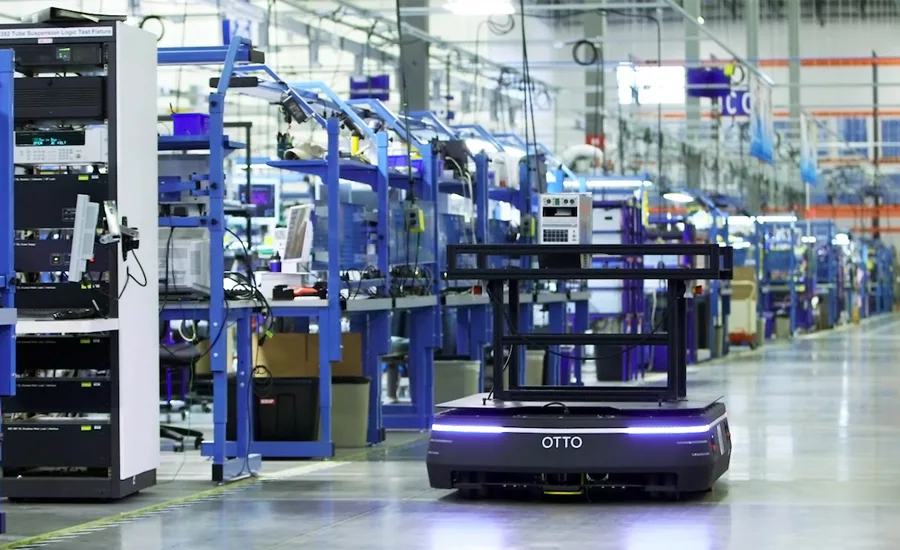
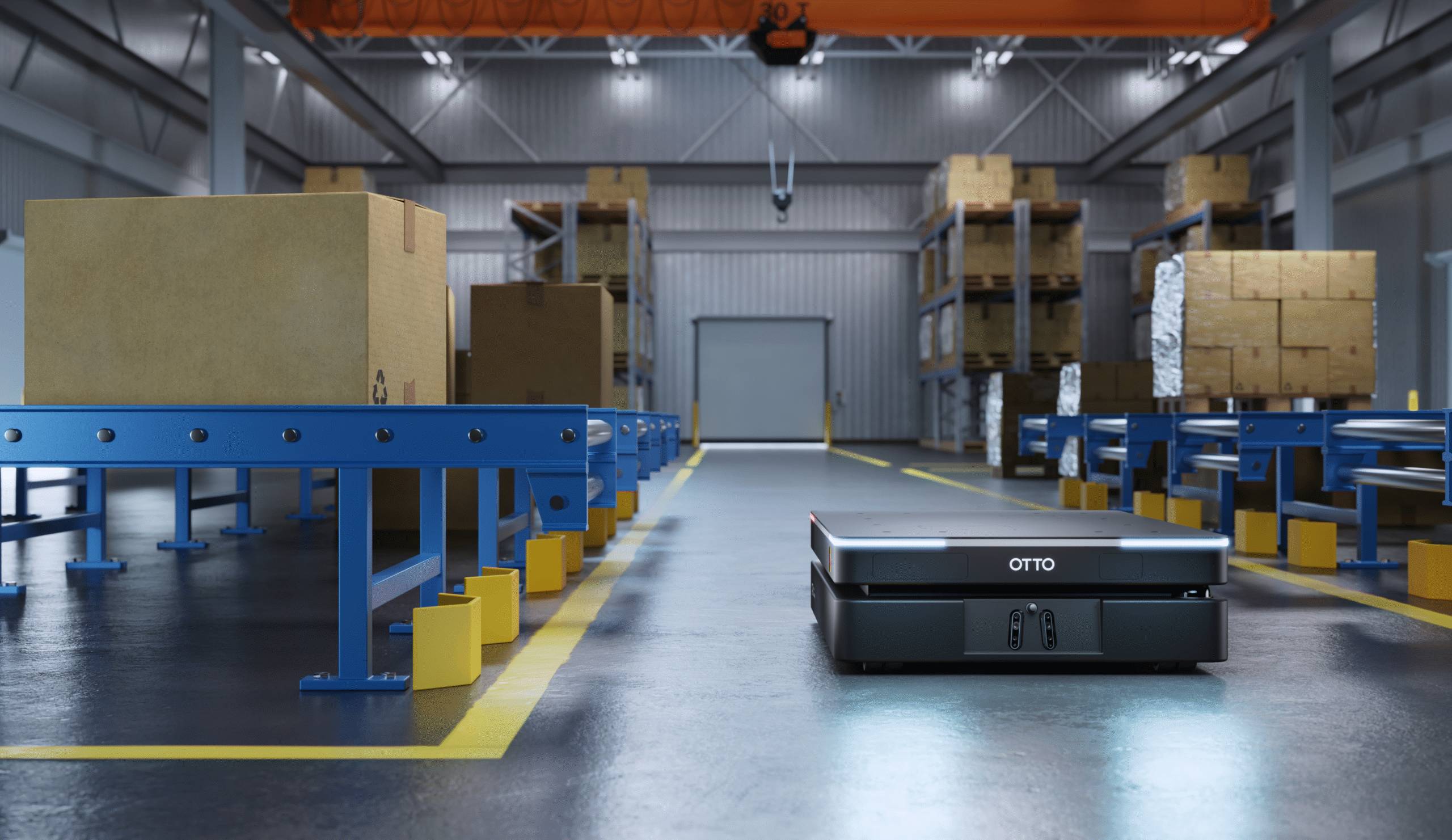
The OTTO product line is a family of AMRs differentiated primarily by payload capacity, designed to cover the range of material transport loads found in manufacturing and warehouse environments. The robots use infrastructure-free navigation, meaning they do not require magnetic tape, reflectors, or any physical modifications to the facility. Laser scanners build and continuously update a map of the environment, and the fleet management software coordinates movement across the entire robot population simultaneously.
The fleet management layer is as important as the hardware. Individual robot performance in a production environment matters less than how a fleet of 20 or 50 robots behaves collectively across a shift. OTTO's software handles traffic management, task assignment, charging coordination, and exception handling, which is the less visible but operationally critical part of what makes a large AMR deployment run reliably rather than creating new bottlenecks to replace the ones it was meant to solve.
The Milwaukee Production Line
The October 2025 announcement that the first OTTO AMRs had rolled off a new production line at Rockwell's Milwaukee headquarters was notable for a few reasons beyond the symbolic milestone. The new 25,000 square foot facility is assembling the OTTO 600 and OTTO 1200 specifically, the two mid-to-heavy payload models most relevant to manufacturing customers, which suggests Rockwell is building US production capacity for its highest-demand configurations rather than just establishing a token domestic presence.
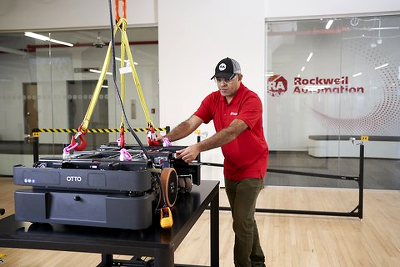
Every OTTO AMR, regardless of where it is built, completes more than 15 miles of test driving before it ships. Laser scanners verify the mapping and navigation systems are functioning correctly, and each robot is tested in a realistic facility environment that includes multiple robots operating simultaneously, because the ability to share location data with other robots in the fleet, including around corners, is part of what is being validated. That 15-mile requirement for a robot that will spend its working life driving inside a single facility is a quality control standard that speaks to how seriously Clearpath took production reliability from the beginning.
Canadian manufacturing in Ontario continues alongside Milwaukee, so this is a capacity addition rather than a relocation. Rockwell has framed the US production expansion as part of a broader $2 billion investment in plants, digital infrastructure, and talent that the company announced around the same period. Customer tours of the Milwaukee OTTO facility are expected to begin in early 2026.
Thoughts
The Clearpath story is a useful case study in how a research-adjacent robotics company transitions into an industrial product company, and what that transition looks like when it works. The decision to launch OTTO as a separate commercial division in 2015, rather than trying to commercialize the research platform directly, kept focus on a specific customer problem and produced a product deployable in environments where downtime has real costs. That focus is what made Clearpath attractive to Rockwell, not the breadth of markets the research division served.
The Milwaukee production milestone is the clearest signal yet that Rockwell is treating OTTO as a core product line rather than an acquisition it is still figuring out what to do with. When a company builds something at its own headquarters and invites customers to watch, it is making a statement about long-term commitment. Companies choosing to expand U.S. based manufacturing capabilities will always get my support. I am hopeful OTTO will produce robotics equipment that will be used across the U.S. Supply chain.
Thanks for reading, consider our article on the Modern Warehouse Automation
Read More on Clearpath and OTTO
Rockwell Automation acquires Clearpath Robotics -- BetaKit
Rockwell signs acquisition agreement -- Rockwell press release
First OTTO AMRs roll off Milwaukee production line -- OTTO Motors newsroom
OTTO Motors focuses on autonomous production logistics post-acquisition -- OTTO Motors
Clearpath acquired by Rockwell -- IEEE Spectrum